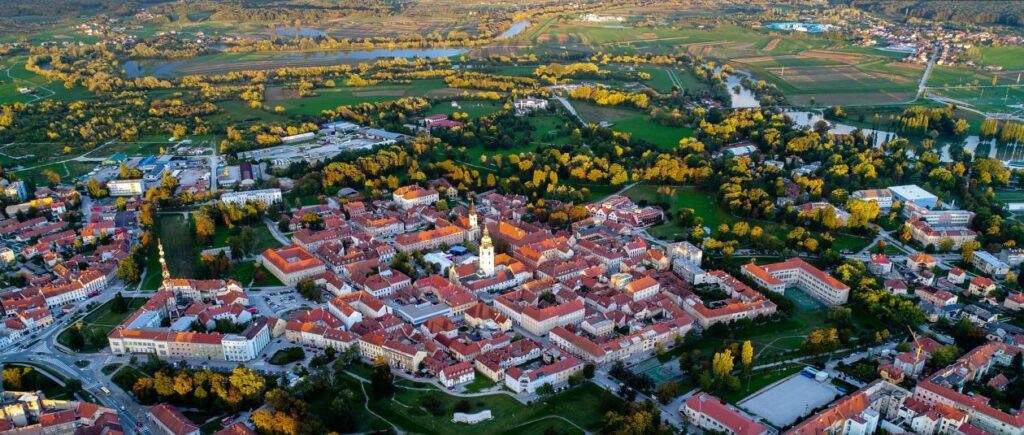
Graz
AustriaEnhanced logging & user-interaction monitoring at a busy urban testbed - real-time hazard and violation detection. YOLOv11 models trained on 4,000-image dataset, mAP ~87%, OCR licence-plate recognition integrated.
iDriving supports road users, road managers and agencies of urban and secondary roads with beyond state-of-the-art monitoring, prediction and warning capabilities - helping Europe meet its road safety goals.
iDriving focuses on enhancing road safety through intelligent, data-driven solutions for urban and secondary roads across Europe. Leveraging AI, digital twins, and real-time monitoring, the project delivers comprehensive safety and traffic management - detecting hazards, optimising maintenance, and enabling efficient vehicle-to-infrastructure communication.
The work is anchored in a Safety Criteria Catalogue, V2I communications, AI-powered edge analytics, predictive maintenance, and open science.
Read the full mission →The first periodic report (D1.5) was submitted on 23 December 2025. Foundational architecture, data governance, AI components and the first iDriving prototype are all in place, with strong cross-WP collaboration and pilots already running.
Each iDriving use case unfolds across two scenarios at six unique pilot sites - generating real-world evidence that infrastructure intelligence makes urban and secondary roads safer.
Enhanced logging & user-interaction monitoring at a busy urban testbed - real-time hazard and violation detection. YOLOv11 models trained on 4,000-image dataset, mAP ~87%, OCR licence-plate recognition integrated.
User-interaction monitoring on shared urban roads - cyclist hand-signal classification, illegal parking detection, traffic-light obstruction. SUMO models calibrated with real Nevers traffic data.
Infrastructure maintenance & defect detection on secondary roads - FMEA framework refined, historical and contextual data aligned with local police and the Municipality of Karlovac.
Hazard monitoring in a major urban network - WRF/WRFDA weather pipelines deployed, environmental hazard scenes (rockslide, fallen trees) defined, dataset annotation underway.
Real-time incident detection on secondary roads - speeding, impaired driving, risky overtaking and rapid response. Initial accident-scene dataset assembled; trial activates late 2026.
Real-time incident response in a smart-city pilot - testing alerts, dispatch and intelligent traffic management. C-ITS Mobile Lab will validate V2X message exchanges.
Three use cases comprise six distinct scenarios that comprehensively evaluate iDriving's technological capabilities across pilots in six countries.
Improving urban road infrastructure by detecting risky behaviours and traffic violations in real time.
Discover USE CASE #2Real-time defect detection, weather monitoring, and digital-twin-driven predictive maintenance.
Discover USE CASE #3Heatmaps, intelligent alerts and rapid response on secondary roads where speed and risk converge.
DiscoverBenchmarks & KPIs that guide every layer of the iDriving system.
Real-time data exchange across sensors, vehicles and road infrastructure.
Compact sensor packs on vehicles & infrastructure for on-site processing.
AI-driven visual inspection, behaviour analysis and weather assessment.
3D visualisation, defect detection and optimal traffic management.
Alerts to road users via vehicles or infrastructure signals.
Real-time simulation enabling anticipation, identification and response.
Five intensive days evaluating real-time hazard and violation detection - bringing the project closer to its vision of intelligent, risk-anticipating roadways.
Read more
A collective effort highlighting challenges, solutions and policy insights from eleven EU-funded projects.
Read more
iDriving joined the first EvoRoads Multiplier Group meeting - building bridges for standardisation and cross-project uptake.
Read more