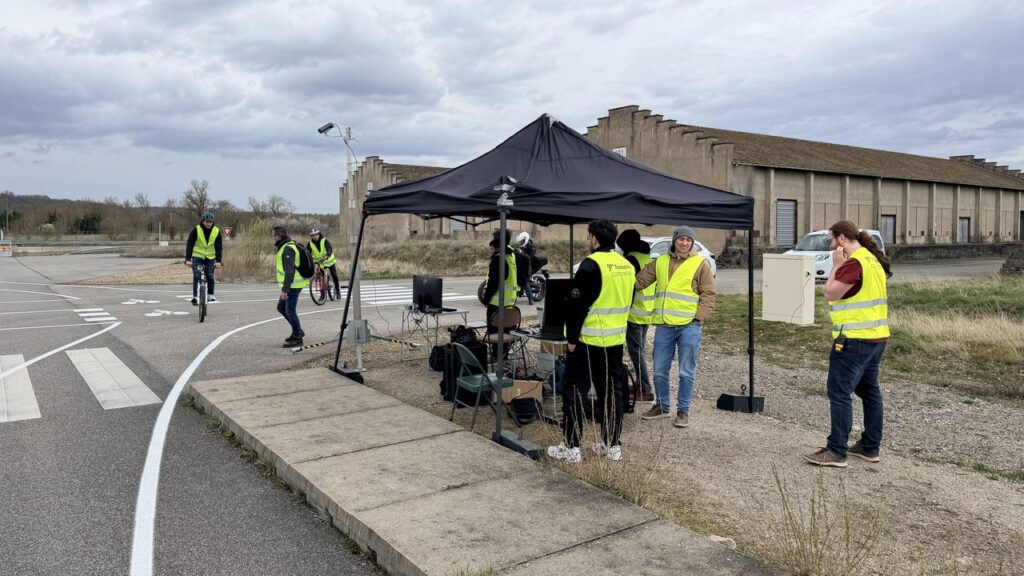
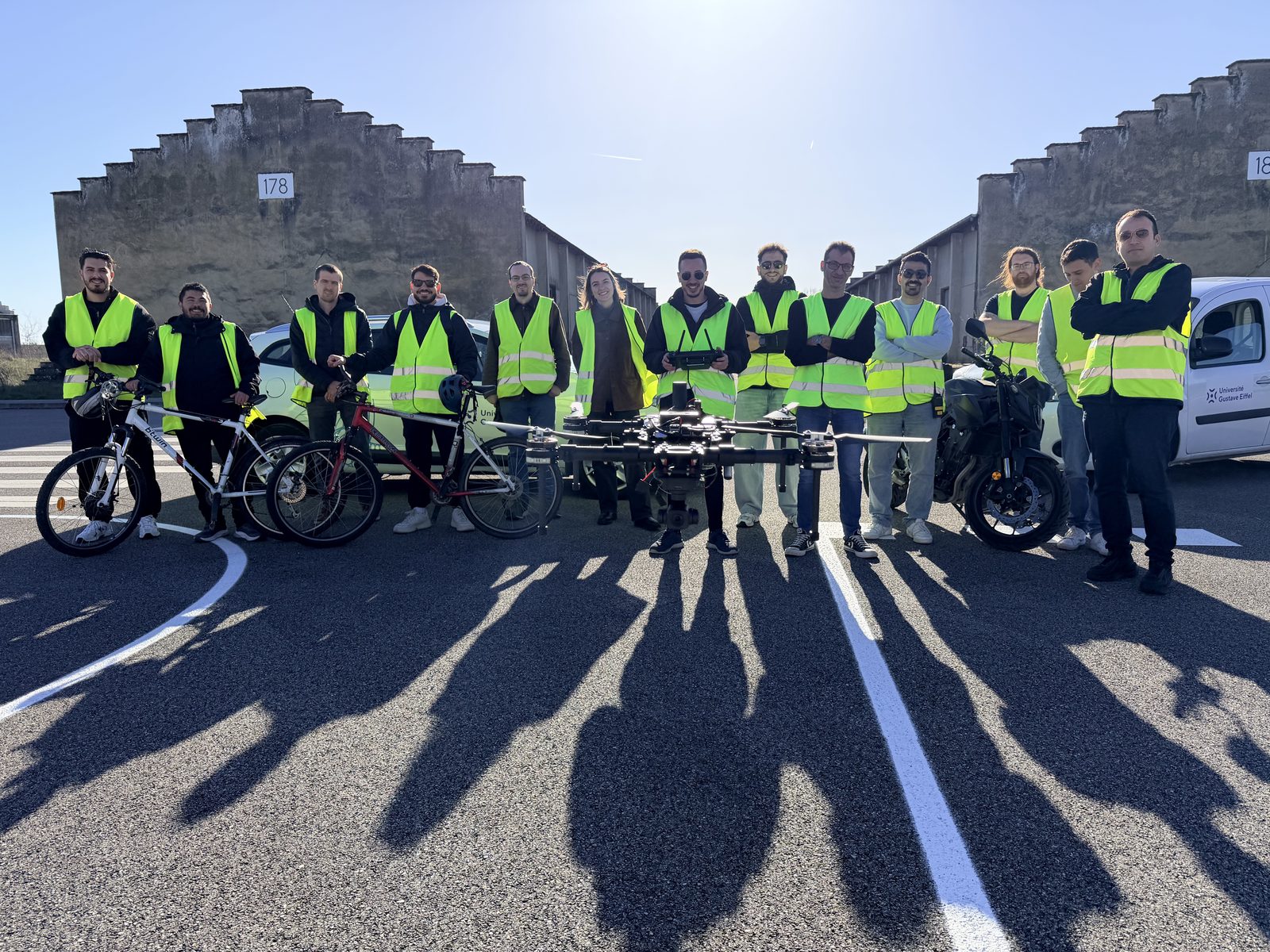
In March 2026, iDriving held its second pilot, this time in France. From 9 to 13 March 2026, project partners met at the Transpolis test track near Lyon to test how roadside cameras, a drone and artificial intelligence (AI) can spot risky behaviour around cyclists and pedestrians and warn road users in real time. As iDriving’s pilots move on to Thessaloniki and Karlovac, we look back at what happened in France.
Safer junctions for everyone
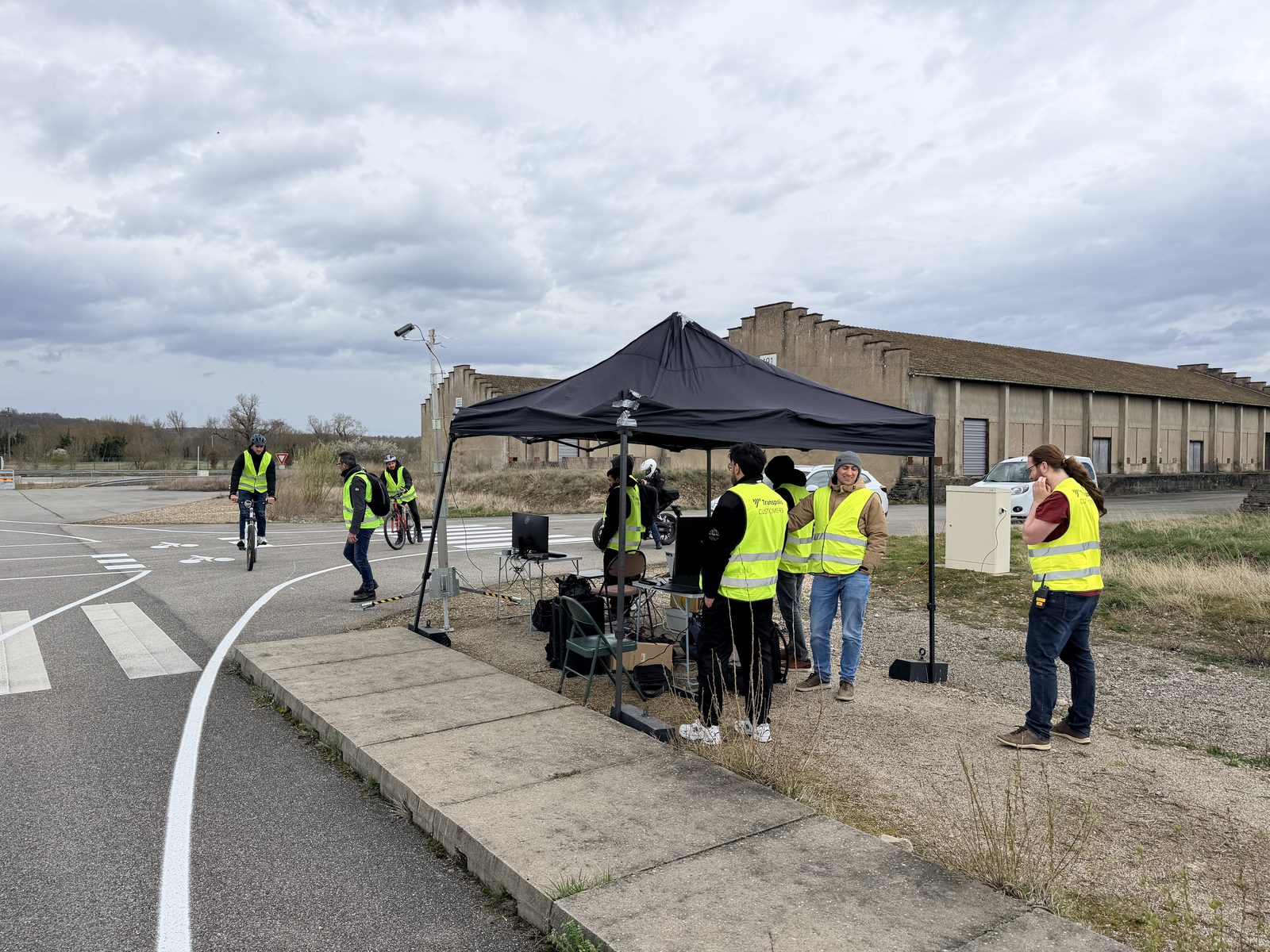
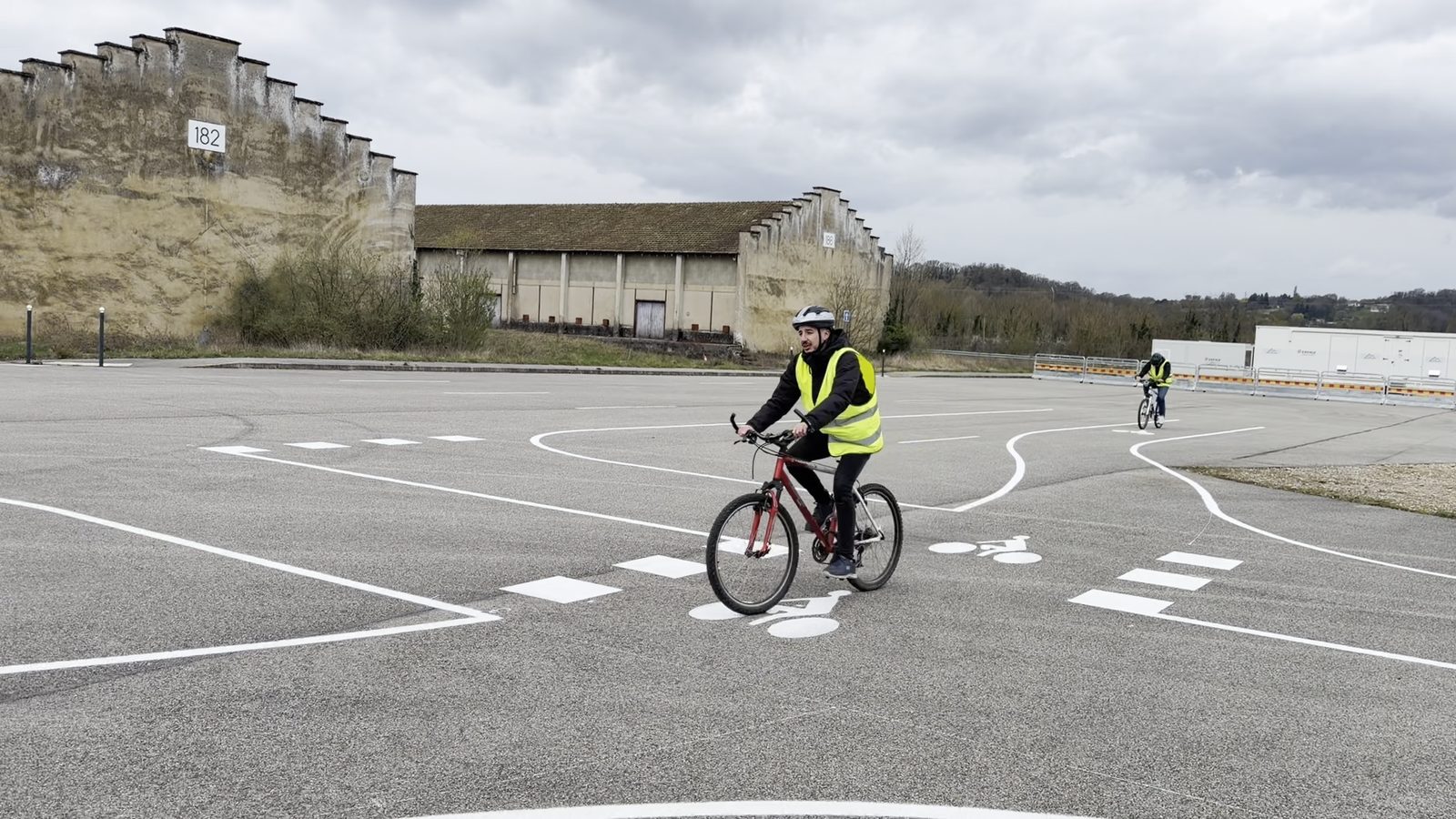
The French pilot is part of iDriving’s Use Case 1, Enhanced logging and user interaction monitoring for improvement of road infrastructure. It addresses a common problem in towns and cities: unsafe interactions between cars, bicycles and pedestrians at busy junctions. The scenario was first developed with the city of Nevers in mind (read about the Nevers workshop). For the trials themselves, the partners used a signalised intersection with cycle lanes and a zebra crossing at Transpolis, a closed test site where risky situations can be staged safely.
Eight everyday risks, staged on a closed track
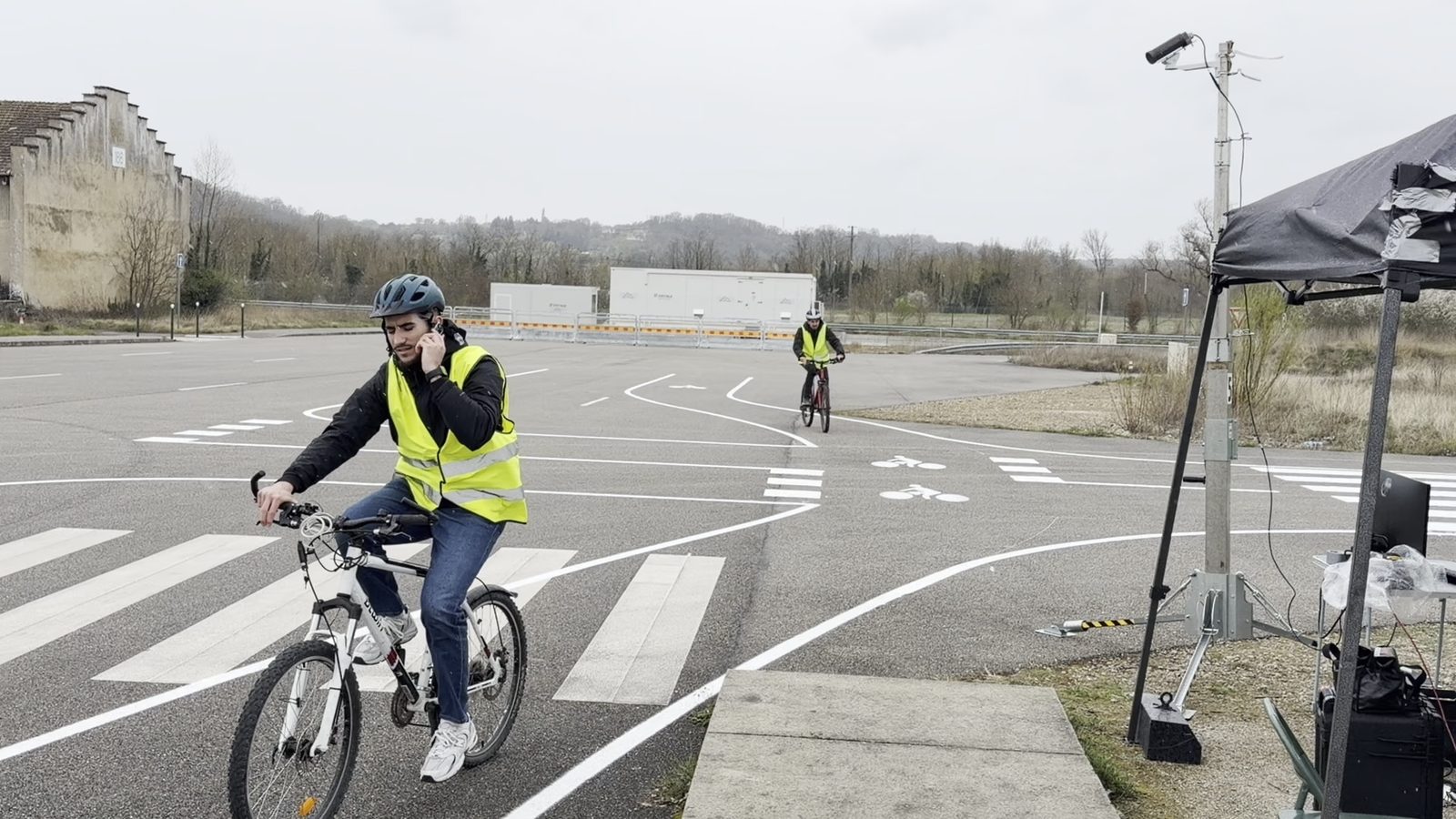
Over five days, the team installed and connected the equipment, ran each scenario several times and reviewed the results together at the end of every day. Using bicycles, a motorbike, cars and a van, they staged eight situations that put vulnerable road users at risk:
- a car parked in the cycle lane;
- a vehicle blocking the view of a road sign;
- pedestrians crossing outside the zebra crossing;
- drivers not giving way to pedestrians on the zebra crossing;
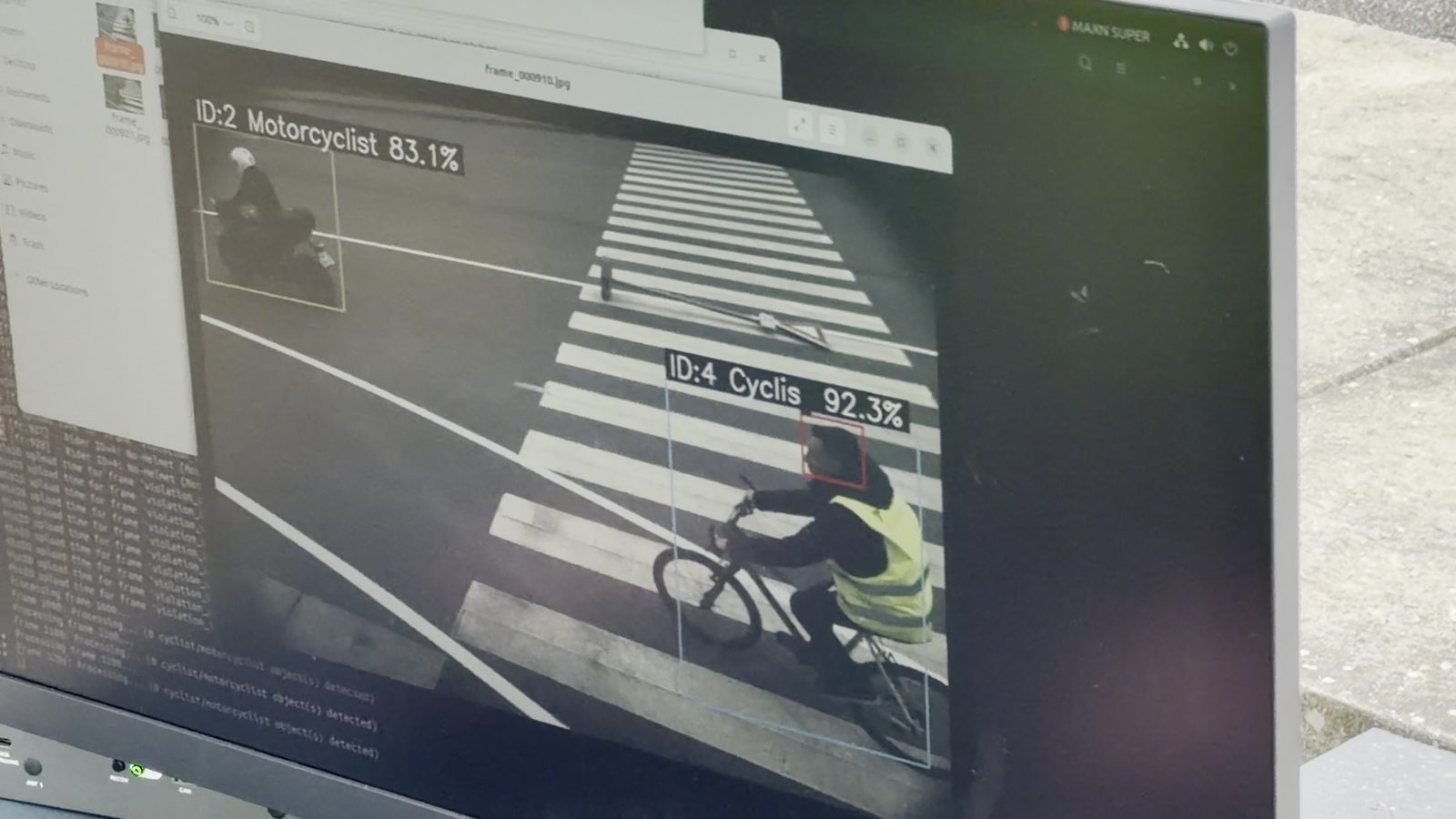
- cyclists and motorcyclists riding without a helmet;
- cyclists using a mobile phone while riding;
- cyclists turning without a hand signal, or signalling one way and turning the other;
- road users in the wrong lane, such as cars in the cycle lane or cyclists on the road.
From detection to warning
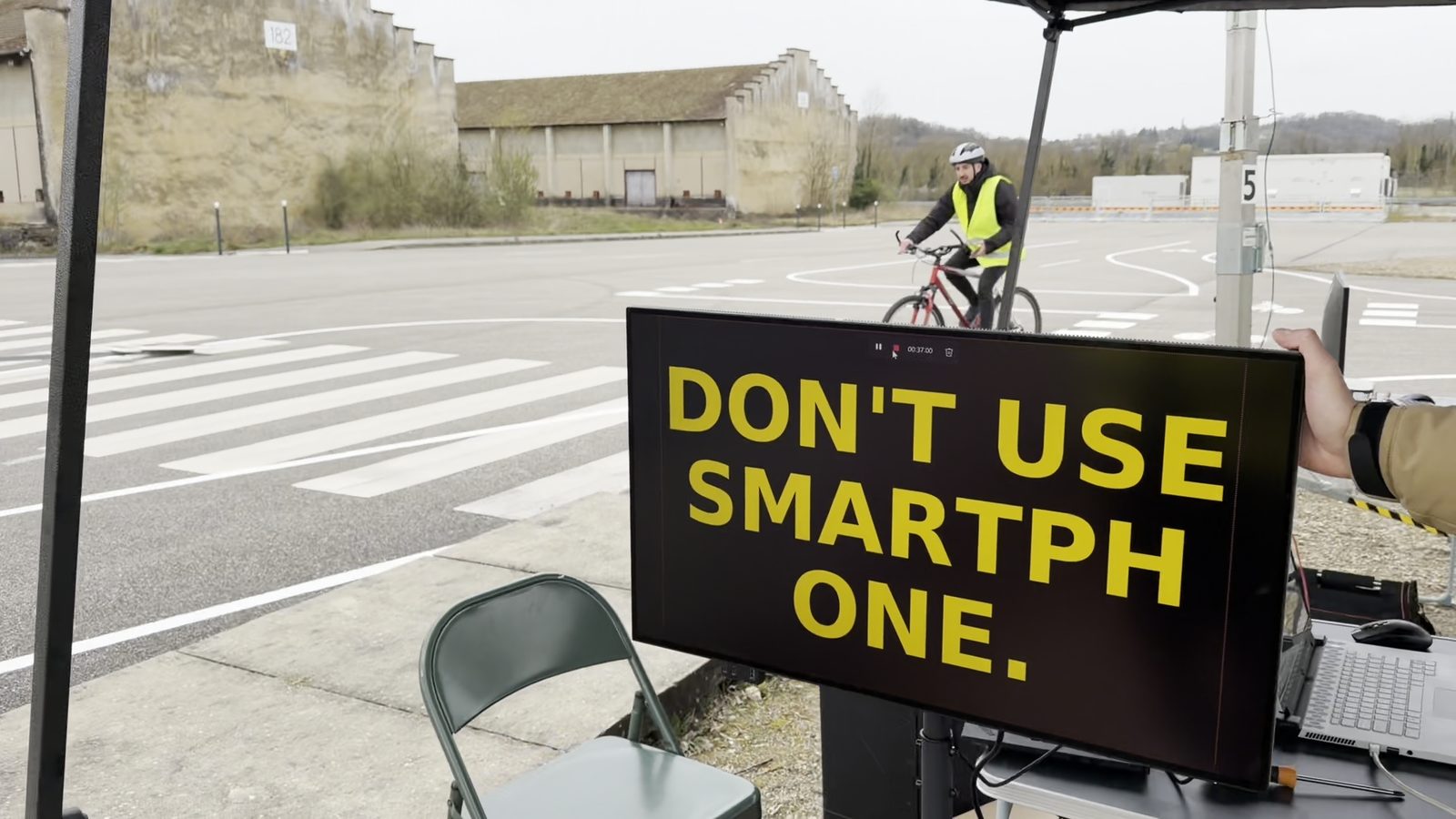
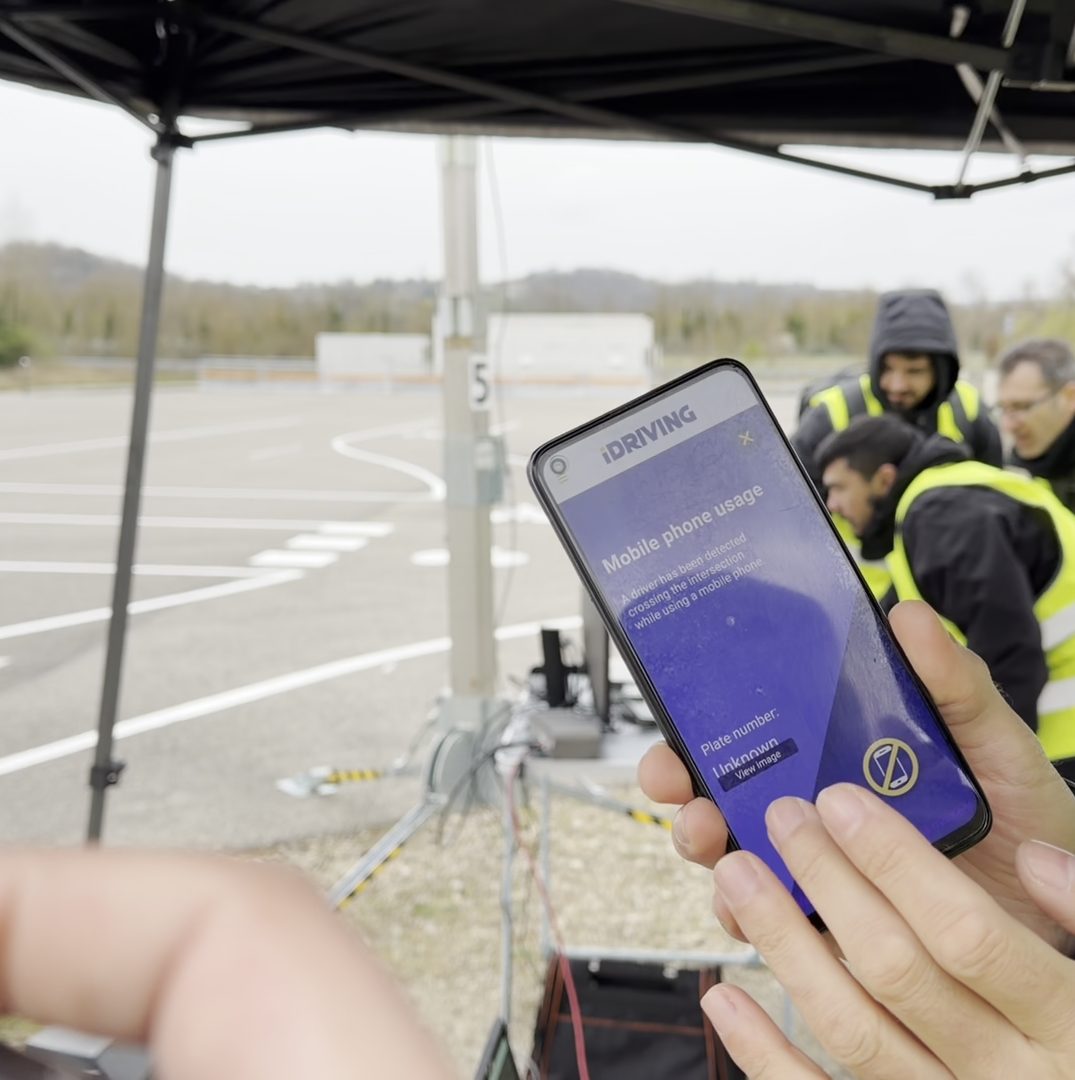
The roadside cameras were connected to small computers on site, so the AI models could analyse the video where it was recorded, without sending it to a distant data centre. When a model detected a risky manoeuvre, the iDriving platform passed the alert on straight away: a warning appeared on a variable message sign next to the road, for example “Don’t use smartphone”, and as a notification in the iDriving mobile app. Operators could follow the alerts in the project’s control centre.
A drone that knows where to look
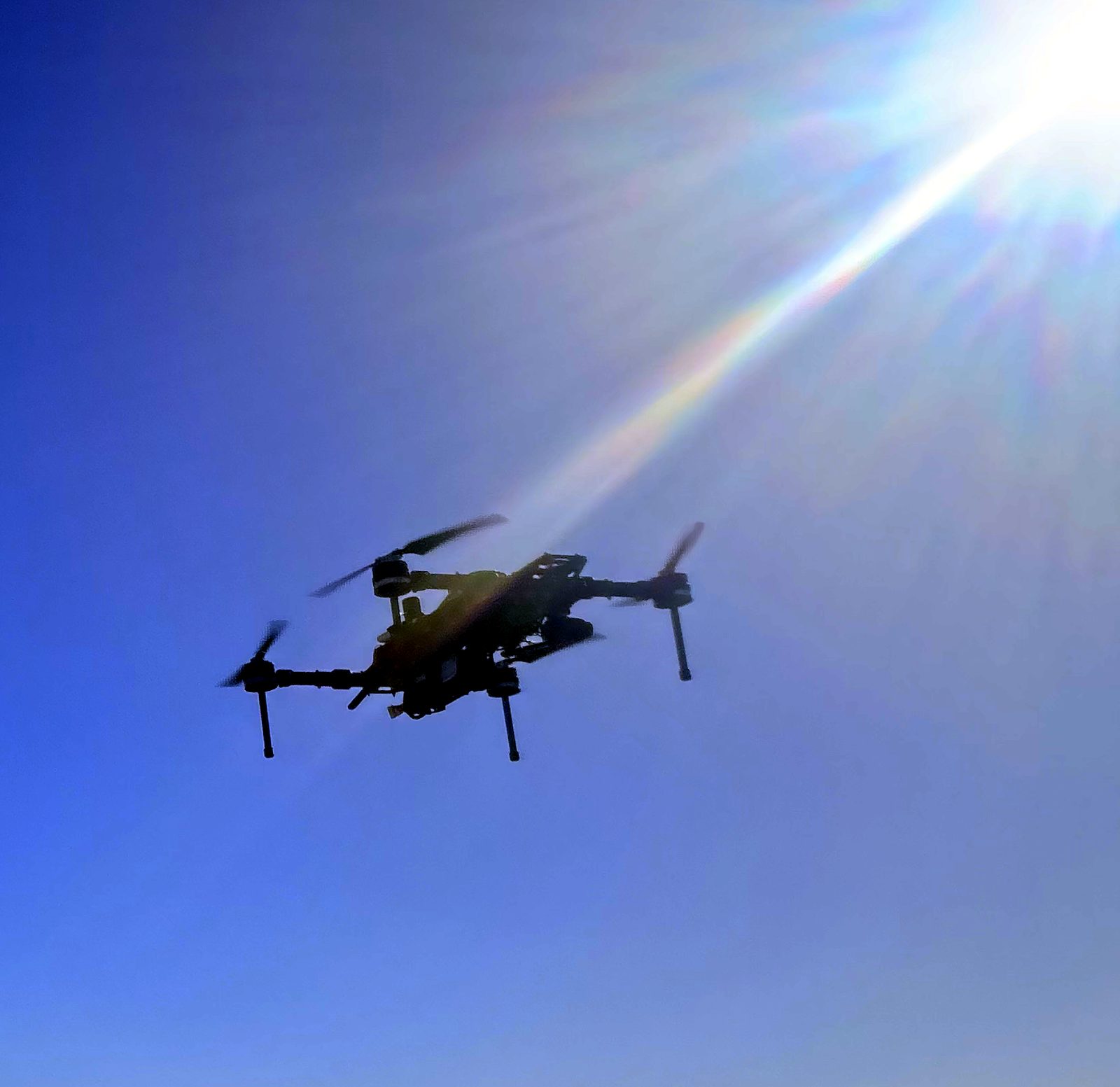
For the illegal parking scenario, a drone joined the cameras on the ground. Acceligence, which leads iDriving’s work on aerial surveillance, provided the drone platform, with the AI detection model running on board. The drone followed a flight path calculated by path-planning software developed in the project, spotted the car parked in the cycle lane and triggered a warning on the roadside sign.
Drones are one of several sources of data in iDriving. They also supported the trials in Graz and the pilot in Thessaloniki, and in the Karlovac pilot Acceligence uses them to detect road defects.
Who took part
The pilot was hosted by Université Gustave Eiffel, which co-leads Use Case 1, and coordinated on site by CERTH, the iDriving coordinator. Each partner brought its own part of the system:
- Université Gustave Eiffel organised the pilot, provided a test vehicle and leads the project’s digital twin work;
- CERTH provided AI tools that detect illegal parking, helmet and phone use, cyclists’ hand signals and blocked road signs, as well as the drone path planning;
- Acceligence provided the drone platform with on-board AI;
- TEKNIKER provided detectors for zebra-crossing, wrong-lane, hand-signal and give-way violations, and secure real-time data exchange between the components;
- SIMAVI provided the control centre and the mobile app that delivers the warnings;
- INTRA connected the different services into one platform;
- AustriaTech, which leads the evaluation, joined for the last two days.
What came out of it
By the end of the week, all eight scenarios had been tested, most of them in several variations, and the warnings appeared on the roadside sign as planned. The videos, detection logs and other data recorded during the week went to the evaluation team, who use them to assess how well the system performs. The partners also noted practical lessons, for example on camera positions, lighting and weather, which are helping them prepare the next pilots.
Why it matters
Cyclists and pedestrians are among the most vulnerable road users, and many dangerous situations happen at junctions. By spotting risky behaviour as it happens and giving clear, immediate feedback, iDriving aims to encourage safer habits and to help road authorities see where their streets need improving. Learn more about Use Case 1.
What’s next
After Graz in February and France in March, iDriving moved on to its second use case, on road maintenance and hazard monitoring. The Thessaloniki pilot took place on 6–8 October 2026, and the Karlovac pilot follows on 21–22 October 2026. The last two pilots, in Alba Iulia (Romania) and Bizkaia (Spain), are planned for 2027.